News
Inclusion Starts with Attitude
Written by Carol Cooke AM PLY
I remember when I first started in Para sport — there was a clear divide between how athletes with disabilities were viewed and how “able-bodied” athletes were seen. We were often considered people simply having a go, while others were recognised as athletes.
When I began looking for a rowing club, I was honest over the phone and said I had a slight disability. Before even asking what that meant, I’d often hear, “we can’t cater for that,” followed by a click. Eventually, I did find a club willing to take me on, and that’s where my rowing journey began.
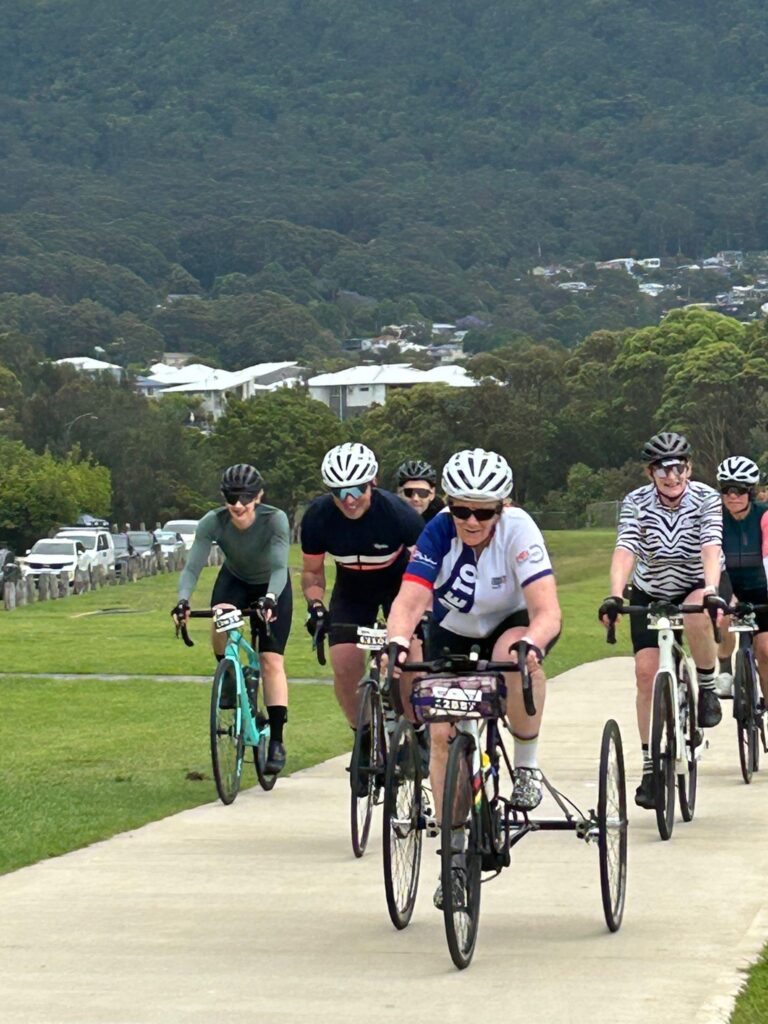
My first Para Cycling race was in April 2011 at the Australian Para Cycling Championships in Queensland. It was a stand-alone event for riders with disabilities. It was wonderful to be there — but it also felt completely disconnected from the broader cycling world.
When I gained a scholarship at the Victorian Institute of Sport, I questioned why one of our Para cyclists who rode on two wheels received official VIS kit, but myself and a hand cyclist didn’t. The head of cycling told us we weren’t “real riders” because we rode on three wheels. That didn’t sit well with me. I went to the CEO and raised the issue of discrimination. The result? We got our own “special” kit — not the same as everyone else’s — but it was a start. After our strong performances at the Rio Paralympics, we were finally recognised as “real riders.”
Years later, when nationals were held in Victoria, a man named Bill Upton from the Southern Masters Cycling Club organised the event. When Cycling Australia told him Para cyclists didn’t need national jerseys because we were “just giving it a go,” he was furious. He told them in no uncertain terms that his club would pay for those jerseys — and they did.
After a couple of years of lobbying, we were finally included as a category at the Australian National Road Cycling Championships. I even wrote notes for the announcers so they could explain the classifications and highlight the incredible skill of each rider. For the first time, the wider cycling community began to see us for who we really were — elite athletes.
Even after competing in three Paralympic Games, I’ve only recently begun to see a real shift in how athletes with disabilities are perceived. We’ve moved from “isn’t it nice they’re trying sport” to “wow, look at that athlete!”
We’ve come a long way — but we still have a long way to go. Para sports and people living with a disability still don’t get the coverage or respect they deserve. True inclusion won’t happen through policy or token gestures — it starts with attitude.
It’s about seeing ability before disability, recognising effort before difference, and celebrating performance before pity. Inclusion isn’t just about opening doors; it’s about changing the way we think when people walk — or roll — through them.
Until every athlete, regardless of ability, is seen simply as an athlete, our work isn’t done.
Planning for the Unexpected this Fire Season
Written by Carol Cooke AM PLY
Most Australians with disability do not have an emergency plan in place. As RIAC’s Ambassador, Paralympian Carol Cooke AM PLY knows this is not just a statistic, it is a risk to lives, dignity, and independence. With another Fire Danger Period fast approaching, now is the time to prepare and make sure no one is left behind.
Planning for the Unexpected
Emergencies rarely give us warning. Fires, floods, heatwaves, or pandemics can arrive quickly and turn life upside down. For many people with disability, the risk is not only the disaster itself but the lack of preparation that leaves them more vulnerable when it matters most.
A University of Sydney study found that most Australians with disability do not have an emergency plan. That should concern all of us. If a bushfire swept through tomorrow, would you know how to get out? Would the transport be accessible? Would emergency services know what support you need? For too many people, the answer is no.
Living with multiple sclerosis, I know what it feels like to face uncertainty. There are days when I do not know how my body will respond. What helps me is having a plan. Preparation gives me confidence and reduces fear. The same principle applies to disasters. Planning ahead is not about expecting the worst, it is about being ready so that when the unexpected happens, we are safer and less isolated.
Emergency planning does not have to be complicated. It can start with a few simple questions:
-
Do you have a safe evacuation route?
-
Who can you call if you need help quickly?
-
Is there a plan for your medication, equipment, or service animals?
-
Do your neighbours or local services know what support you might need?
For anyone wanting to take the next step, I recommend the Person-Centred Emergency Preparedness (P-CEP) toolkit, developed by the University of Sydney together with people with disability. It provides clear, practical steps to create an emergency plan tailored to your own support needs. You can find it here: https://collaborating4inclusion.org/pcep/
These small steps can save lives. They also make a huge difference for the families, carers, and communities who want to support people with disability in an emergency.
What is clear is that planning cannot be left to individuals alone. Governments, councils, emergency services, and service providers all have a role to play. Preparedness must include people with disability from the start, not as an afterthought.
The best time to make a plan is before you need one. So talk with your family, friends, and services today. Put it in writing. Share it. The more people who know what you need, the safer you will be.
5 Tips to Start Your Emergency Plan
-
Know your exits
Identify safe evacuation routes from your home and local area.
-
Keep key contacts handy
Write down phone numbers for family, neighbours, carers, and local services.
-
Plan for your essentials
Think about medication, equipment, service animals, or power needs.
-
Share your plan
Let people close to you know what support you might need in an emergency.
-
Stay informed
Sign up for local emergency alerts and updates from your council or state services.
National Self Advocacy Day
Nothing About Us Without Us
Written by Carol Cooke AM PLY
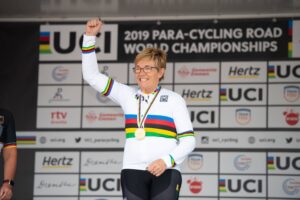
From the sporting arena to her role as RIAC’s Ambassador, Carol Cooke AM PLY has seen how self-advocacy is essential to empowering people with a disability to defend their rights and be included on their own terms. National Self Advocacy Day is a chance to celebrate the courage it often takes to self-advocate and to support people with disability in being heard.
Why self-advocacy matters more than ever
I have spent a lot of early mornings on a trike, pushing into the wind and wondering if my legs would hold up for another kilometre. You know where the finish line is, but sometimes the hills and headwinds make you question if you will get there. Living with multiple sclerosis has often felt like that. The diagnosis more than 27 years ago was life-changing, but it also gave me a choice. I could sit back and let it define me, or I could speak up and keep moving forward.
In cycling I learned quickly that nothing comes without self-advocacy. Access to training venues, fair competition, being recognised for what I could do rather than what people assumed I could not. None of that just landed in my lap. I had to ask. Sometimes I had to fight. And sometimes I had to laugh at the sheer absurdity of it all.
That lesson has never left me. Self-advocacy is not an extra, it is a survival skill. It is how people with disability get the support, respect, and opportunities they deserve. And it is why today, National Self Advocacy Day, matters so much.
Self-advocacy is about finding your voice, even when you are tired, even when you have been ignored before, and using it. It is about saying, “this is my life, and I know what works for me.” It is also about standing together. One voice can be dismissed. A chorus of voices is much harder to ignore.
Too often, decisions about disability are made without the input of people with disability. Services, policies, programs, all rolled out with the best intentions, but without the lived experience that makes them effective. That is where the saying “nothing about us, without us” comes from. It is not a slogan, it is a reality check for anyone in power.
At RIAC I see every day how powerful self-advocacy can be. It changes systems. It changes services. It changes lives. Whether it is someone speaking up to keep their housing secure, to make sure their child has the right supports at school, or to challenge discrimination in the workplace, those moments of courage add up to real change.
Here is the truth. Self-advocacy is not always easy. It can be exhausting. It can be confronting. It can feel like shouting into the wind. But every time someone speaks up, they chip away at those barriers. They make it easier for the next person. And that is how movements are built.
So today let us celebrate self-advocates everywhere. Let us listen to them. Let us make room for them at the table, not as a token, but as equals. If you are a person with a disability, I encourage you to keep going. Your voice matters, even when it feels small. And if you are an ally, whether you are a friend, a family member, a service provider, or a policymaker, then your role is simple. Amplify those voices, do not speak over them.
Change does not happen overnight. And it does not happen alone. But it does happen, step by step, word by word, voice by voice.
On this National Self Advocacy Day, I want to say thank you. Thank you to the people who paved the way by demanding better. Thank you to those still pushing, still questioning, still refusing to be silent. You are the reason the world gets fairer, stronger, and more inclusive, not just for people with disability, but for everyone.